What is the best Opal alternative? The best Opal alternative is reCalm, a scroll-breaker built on Apple Screen Time. Where Opal runs focus sessions and hard "deep focus" locks that hold the door shut, reCalm shields your distracting apps and asks for one calm breath instead. One breath opens any shield, and everything auto-unlocks on its own in 15 minutes, so it interrupts autopilot scrolling without ever becoming a prison.
What Opal does well
Let's be fair first. Opal is one of the most polished screen time apps on iOS. It lets you schedule focus sessions, group distracting apps, and see your screen time turned into scores and progress you can actually feel good about. Its strictest modes make sessions very hard to end early, which is exactly what some people want. If gamified stats and firm locks motivate you, Opal delivers.
But there is a moment Opal doesn't handle gently: the moment you push back.
The problem with fighting your own blocker
Nobody plans to spend hours on their phone. It starts with just a quick check. When a hard lock stands between you and that quick check, one of two things happens. Either you wait it out feeling low-grade resentful, or you find the workaround, and once you've found it once, the blocker is decoration.
Hard locks treat the urge as an enemy to be defeated. But scrolling isn't the problem. Losing awareness is. Most people don't need more discipline. They need more pauses.
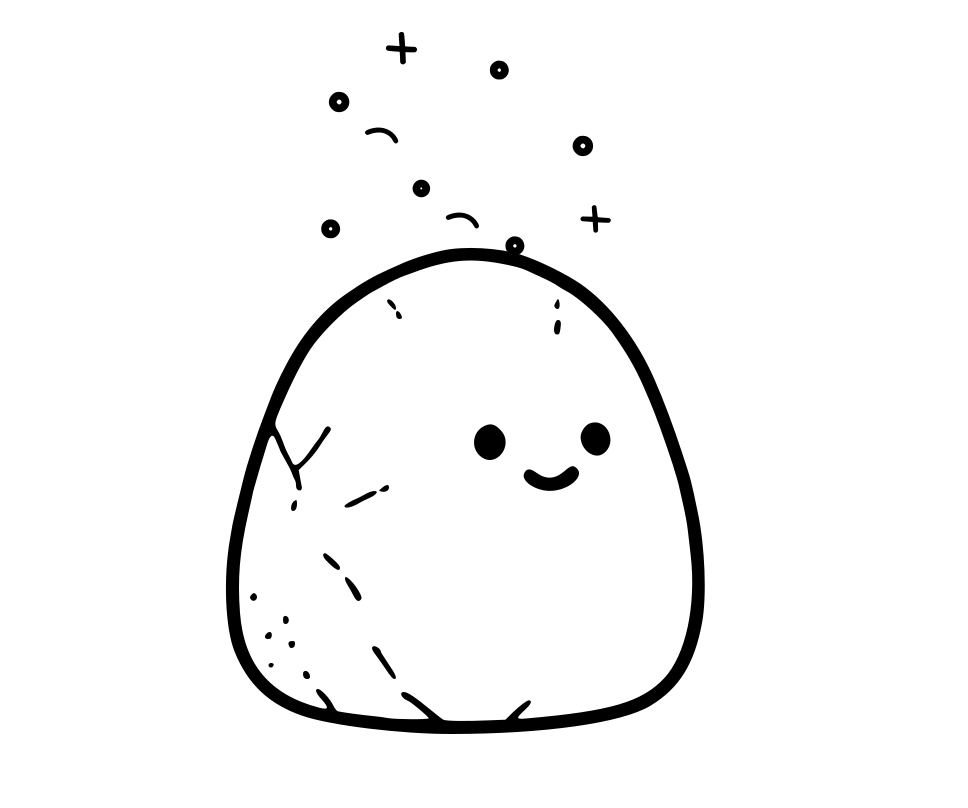
That's the bet behind reCalm. Instead of a wall, it puts a shield in front of Instagram, TikTok, YouTube, or whatever pulls at you. When you tap the app, you meet Timi, a small ink-line pebble, waiting calmly. One breath in reCalm and you're through. No fight, no bargaining, no override guilt. Just a few seconds where autopilot switches off and you get to decide on purpose.
And if you ever just need in, everything unlocks on its own after 15 minutes. reCalm is never a prison. That sounds like a weakness until you live with it: because the exit is always there, you stop scheming against the app and start noticing your own habits.
reCalm vs Opal
| Opal | reCalm | |
|---|---|---|
| Approach | Scheduled focus sessions and app blocking | A shield with a breath in front of chosen apps |
| When you resist | Strict modes hold the lock; you wait or work around it | One breath opens any shield |
| Escape hatch | Limited in the strictest modes, by design | Everything auto-unlocks in 15 minutes, always |
| Tone | Gamified: scores, stats, focus streaks | Calm and warm: Timi the pebble, zero guilt |
| Privacy | Screen time analytics and reports | Built on Apple Screen Time; reCalm never sees inside your apps |
| Price model | Subscription for full blocking features | Free breathing tier; Practice tier $3.33/mo billed yearly, 7-day trial |
Who should stay with Opal
Honestly, some people should. If you want scheduled deep-work blocks that you genuinely cannot end early, Opal's strict modes are built for that and reCalm deliberately is not. If screen time scores, rankings, and detailed reports keep you engaged, Opal leans into them and reCalm leans away. And if your goal is structured work sessions more than breaking a doomscroll loop, Opal's session model may fit your day better.
reCalm is for the other group: people who have tried deciding harder, tried hard blockers, watched both fail, and suspect the missing ingredient was never force. It was a pause.
What using reCalm actually feels like
You pick the apps that pull at you. reCalm shields them through Apple's Screen Time framework, which also means your browsing and app activity stay on your device; reCalm never sees inside your apps. Next time your thumb drifts toward the feed, the shield appears. Timi is waiting. You take one breath. Most of the time, that breath is enough to remember you didn't actually want to be there. Sometimes you breathe and go in anyway, and that's fine too, because now it was a choice.
The breathing pauses are free, forever. The app shield, checkpoints, and gentle reminders live in the Practice tier at $39.99 a year, which works out to $3.33 a month, with a 7-day free trial.
Opal sells itself in the language of control, which is the frame the whole category shares. Why that frame loses, and what replaces it, is in phone control apps and why control is the wrong word.
Switching without losing the week
The awkward part of leaving a blocker is the first evening with nothing in the way, and it is worth expecting rather than being surprised by.
For a day or two the absence of the wall reads as permission, and usage goes up. That is normal and it settles, but it is also the moment most people conclude the softer tool does not work and reinstall the strict one. Give it a week before judging, and judge it on whether you noticed yourself deciding rather than on a total.
The other thing to leave behind is the scoreboard. Whatever run of good days Opal was counting, it does not transfer, and trying to protect a number is the mechanism that turns one ordinary evening into quitting entirely. Why that happens is in the day you missed.
Frequently Asked Questions
Is reCalm a stricter or gentler alternative to Opal?
Gentler, on purpose. Opal's strongest modes lock apps until the session ends. reCalm always lets you through with one breath and auto-unlocks everything after 15 minutes. It trades enforcement for awareness, which tends to last longer than any lock.
Can reCalm block apps like Opal does?
Yes. reCalm's Practice tier shields the apps you choose using Apple's Screen Time framework, the same system-level tooling. The difference is what the shield does when you arrive: it asks for a breath instead of refusing you.
Does reCalm track my screen time like Opal?
No. reCalm is built on Apple Screen Time, so shielding happens through Apple's own privacy layer and reCalm never sees inside your apps. There are no screen time scores or leaderboards, just the pause.
Other comparisons
reCalm vs Brick · reCalm vs one sec · reCalm vs ScreenZen
If you know which app the loop lives in, start there instead: Instagram, TikTok, YouTube Shorts, Reddit.